| |
| Thursday, 08 October 2026 |
| Clarice Cliff, the Doyenne of Art Deco |
| Viv Lawes |
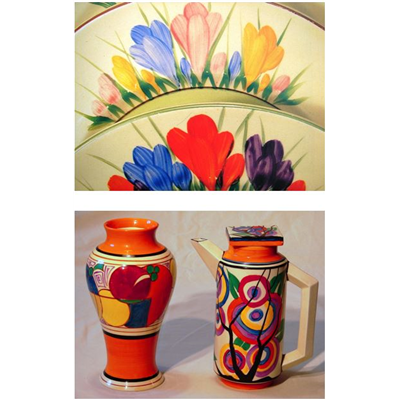 |
This lecture explores an artist whose work, inventiveness, and ability to catch the zeitgeist is still admired a century after her bold 'Bizarre' wares were launched in 1927. These Art Deco masterpieces are the products that most vividly signify Clarice Cliff's legacy. She spent a lifetime innovating. Born in 1899, she was a working professional whose lifespan covered the period in which women broke through the barriers of the art world. While the Royal Academy barred women from accessing the full training and privileges of their male counterparts, the pottery industry was one that had traditionally offered female artists the opportunities to excel.
Vivienne Lawes
I am an art historian, curator, author and journalist with over 25 years’ experience in the art market. I teach at several Higher Education institutions, including the University of the Arts London, Sotheby’s Institute of Art, the City & Guilds of London Art School, SOAS (University of London) and Imperial College. In January 2021 I received the Geoffrey Bond Bursary for Art, an annual prize awarded by the Worshipful Company of Educators to an “outstanding educator” nominated by their institution.
My articles, essays and reports have been published in numerous specialist journals, newspapers, catalogues, handbooks and websites, aimed at both the academic and general readership in print and online. The title of my current book project is The Bronze Horse: Themes in Equine Sculpture from Antiquity to the Present Day; in Spring 2021 I embarked on a critique and biography of contemporary Filipino artist Andres Barrioquinto.
Since 2011 I have been Senior UK Consultant to Singapore gallery One East Asia and have co-curated many exhibitions of Southeast Asian modern and contemporary art in London and Singapore. I am also Head of Education for the London Asian and African Contemporary Art Fair (founded 2020).
When time allows I lecture as an on-board art historian for cruise lines. |
|
| Thursday, 12 November 2026 |
| The Brilliance of British Architecture |
| Ian Swankie |
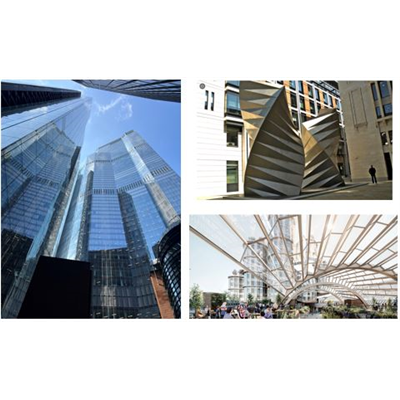 |
In the field of world class architecture, British talent has always been at the forefront, and we have much to celebrate. In this talk, Ian tours around the UK and overseas showcasing the brilliance of some of the designers who have made huge improvements to the built environment and enhanced the lives of those around them. Famous names like Lutyens, Gilbert Scott, Foster, Hadid and Rogers are joined by several lesser known but equally creative architects.
Ian Swankie
A Londoner with a passion for art and architecture, Ian is an official guide at Tate Modern, Tate Britain, Guildhall Art Gallery and St Paul’s Cathedral, and gives tours around each venue. He is also a qualified and active freelance London guide and leads regular tours for various corporations and organisations. Since 2012 he has led a popular weekly independent art lecture group in his home town of Richmond in West London. He is a Freeman of the Worshipful Company of Art Scholars, one of the City livery companies |
|
| Thursday, 14 January 2027 |
| Recognise the artist |
| Chantal Brotherton Ratcliffe |
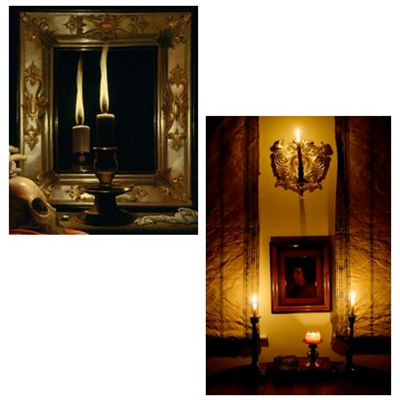 |
When we receive a letter or a Christmas card from someone we know, we often recognise the handwriting straight away and know who it’s from without even opening the envelope. Recognising the hand of an artist can be like that – an instant certainty that the painting must be by Rubens, or El Greco, or Rembrandt. Yet if you try to explain to someone else how you know that your letter is from that person, or what it is in their handwriting that is so distinctive, you will probably struggle to put it into words. This lecture takes examples of a wide range of artists from the 15th, 16th 17th and 18th centuries, and will put into words what it is that tells us a picture is by Rubens rather than Rembrandt, or even, by Rubens rather than by, say, Van Dyck, who was taught by him and painted so very much like him. My lecture uses photos of small details of paintings greatly enlarged, to demonstrate some of the distinctive quirks and give-away characteristics of artists from Mantegna and Bellini to Canaletto and Gainsborough. I’ll share with you tips and tricks of art-gazing and show you how to have the enormous satisfaction of looking at an unfamiliar painting and realising that you can instantly recognise the artist.
Chantal Brotherton Ratcliffe
MA in History of Art from Edinburgh, PhD from the Warburg Institute, London University. With 40 years' experience as a lecturer, Chantal Brotherton Ratcliffe has taught at Sotheby's Institute of Art on the MA in Fine and Decorative Arts since 1989, and as a freelance lecturer for a number of societies and institutions in London, including the National Gallery and the Wallace Collection. Having also trained as a paintings conservator, she brings an understanding of the making and the physical painting. |
|
| Thursday, 11 February 2027 |
| Chardin and Still Life |
| Kathy McLauchlan |
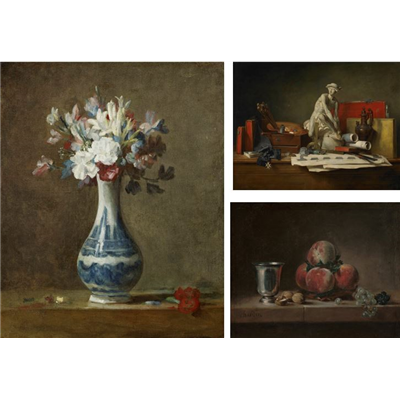 |
Chardin's still-life paintings drew the astonished admiration of his contemporaries. These included the Enlightenment philosopher Denis Diderot, who remarked that Chardin's ability to evoke the appearance and texture of objects was akin to magic. Chardin's work was also appreciated and sought after by prominent 18th-century collectors including Louis XV of France and the Empress Catherine of Russia. And Chardin's reputation as one of Europe's greatest still-life painters endures to this day. This lecture follows the course of Chardin's career from obscure beginnings to his emergence as one of the most admired artists of his generation
Kathy McLauchlan
A lecturer specialising in 19th-century art history, I am currently a course director at the Victoria & Albert Museum, organising courses and study days on the history of art and design. I teach at several institutions, including Art Pursuits. I am a graduate of Oxford University and the Courtauld Institute, with a PhD on French 19th-century painters in Rome. I am available for both individual lectures and study days. In addition to the subjects on my page, I can cover: • Sketch and Finish in 19th-century French Painting • Montmartre fin de siècle • Mucha and the Slav Epic • America and the Sublime Landscape |
|
| Thursday, 11 March 2027 |
| Bernini’s Sculptures in the Villa Borghese |
| Hilary Williams |
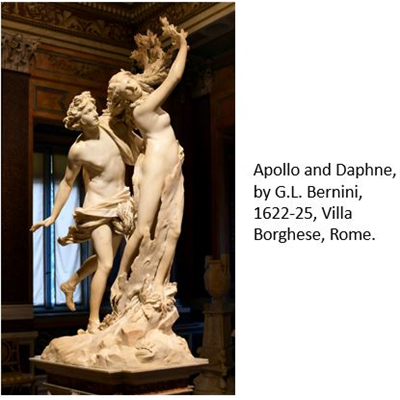 |
Gian Lorenzo Bernini is the greatest Baroque sculptor. His work was esteemed by several Popes. However, at the start of his long career, 'he had arrived in childhood where others might glory in old age', as Annibale Carracci said of his outstanding skill. At the superb Villa Borghese in Rome, is a collection of some of Bernini's stunning figural sculptures. These include the justly famous and exquisite 'Aeneas, Anchises and Ascanius' (1618-1619); 'Pluto abducting Persephone' (1621-1622); the renowned 'Apollo and Daphne' (1622-1625) and 'David' (1623-1624) which tries to outshine Michelangelo. They all come with great stories of high drama.
Hilary Williams was formerly a curator and Print Room Superintendent at the British Museum. She is now Art History Education Officer in the Department of Learning & National Partnerships at the Museum and also lectures there and for the Wallace Collection. She is the founding Artistic Director of The Arts Society of North Kent (Evening). A specialist in 17th century art she has published on Rembrandt. Hilary has vast experience of giving gallery talks, of lecturing and of leading art history tours in UK, Europe, New York and Boston. For the Royal Collection Trust, she has guided Special Interest Private Tours of the State Apartments at Buckingham Palace |
|